
- Home
- Services
- Panel & Service Upgrades
Electrical Panel & Service Upgrades in Southern NH & the MA Border
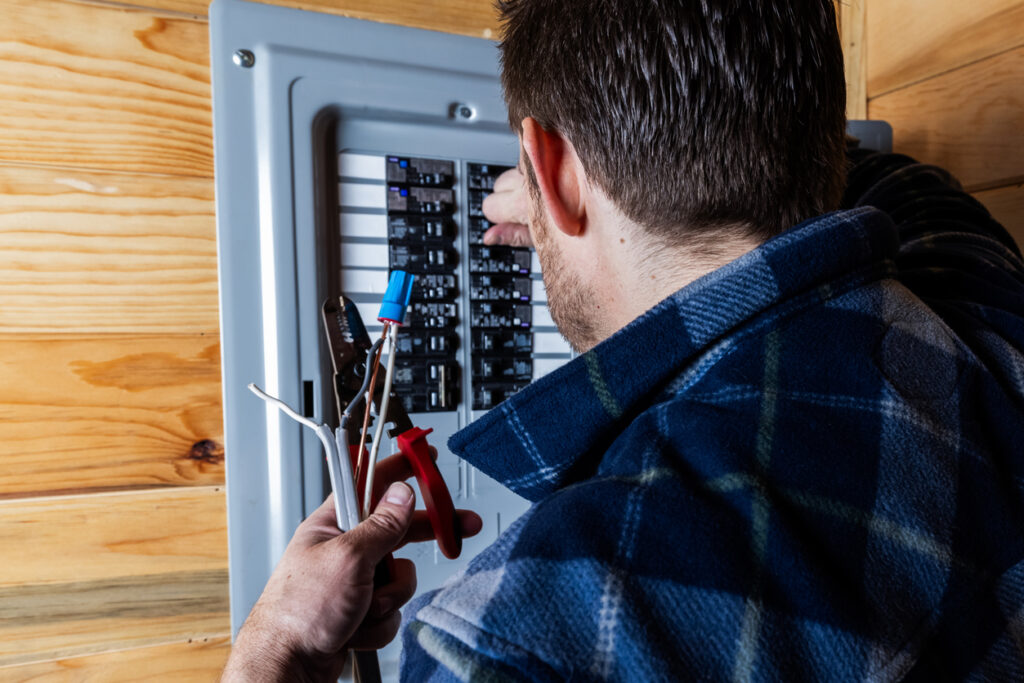
If your breakers trip when the microwave and the space heater run together, or you’re staring at a fuse box wondering whether it’s still safe, you’re looking at an electrical service upgrade. It’s one of the most common jobs WJW Electric handles for homeowners across Southern New Hampshire and the Massachusetts border towns — and one of the most worthwhile, because nearly every other upgrade a house might want depends on it.
Billy Webber is a master electrician licensed in both Massachusetts and New Hampshire, working out of Pepperell right on the state line. Every panel upgrade is permitted, inspected, and finished with a master electrician on-site — not handed off and hoped for. Estimates are free and the pricing is explained before anything gets started.
What Is an Electrical Service Upgrade?
Signs Your Home Needs a Service Upgrade
Most homeowners don’t go looking for a panel upgrade — something pushes them into it. These are the usual triggers:
- Breakers trip regularly when several appliances run at once.
- Lights dim or flicker when the dryer, AC, or well pump kicks on.
- You're adding a big load: an EV charger, hot tub or sauna, heat pump, or electric range.
- You're renovating or planning a whole-house rewire.
- You still have a fuse box, or a panel from a brand with a known safety history.
- The panel is full — no open slots left for a new circuit.
- Your insurance company asked about the age of the panel or the wiring.
- Anything is warm, scorched, buzzing, or rusted at the panel — call right away, don't wait on this one.
Upgrading from 100-Amp to 200-Amp Service
The 100-amp service that was generous when a house was built in 1965 is stretched thin by a 2026 household. Back then it powered lights, a fridge, and a television. Now it’s asked to carry central air, a heat pump, an induction range, a well pump, a home office, and a car charging in the driveway overnight.
Two hundred amps is the practical standard for most homes today. It’s not about running more things at once for the sake of it — it’s about headroom. Once the service is upgraded, the additions homeowners actually want stop being a problem to solve and become a straightforward install.
Some larger homes, or homes with electric heat plus a hot tub plus vehicle charging, are better served by 400-amp service or a subpanel. That’s a load calculation, not a guess, and it’s part of the estimate.
What the Upgrade Process Looks Like
1
Free estimate.
Billy looks at the existing panel and service, talks through what you're planning to add, and runs the load calculation. You get a clear price.
2
Permit and utility coordination.
The electrical permit is pulled and the utility is scheduled for the disconnect and reconnect. This is handled for you.
3
Installation day.
New panel, meter socket, service entrance, and grounding go in. Power is off for part of the day — you'll know the window in advance so you can plan around it.
4
Inspection
The municipal inspector signs off, and the utility restores permanent service.
5
Walkthrough.
Circuits are labeled legibly, the work area is cleaned up, and you get a straight explanation of what's in the box.
Why Homeowners Trust WJW Electric With Panel Work
- Master Electrician, MA & NH — MA Lic. #23701-A, NH Lic. #16011. Fully licensed on both sides of the border.
- A master electrician on-site for the work — not an apprentice sent out to figure it out.
- Fully insured, permitted, and inspected on every job.
- Unrestricted Construction Supervisor License — CS-121037. Rare for an electrician, and it means structural or permit-heavy work tied to your upgrade doesn't require a separate contractor.
- 10+ years of residential electrical experience in these towns.
Panel & Service Upgrade FAQs
How long does an electrical service upgrade take?
Most residential service upgrades are completed in a single day. The power is off for part of that day while the new panel and service entrance are installed. Because the utility and the inspector each need to schedule a visit, the full process from estimate to final inspection usually spans one to three weeks.
Do I need a permit to upgrade my electrical panel?
Yes. Panel and service upgrades require an electrical permit and a municipal inspection in both Massachusetts and New Hampshire. A licensed electrician pulls the permit, coordinates the utility disconnect and reconnect, and meets the inspector so the work is signed off correctly. Unpermitted panel work causes real problems when you sell the house.
Is 100-amp service enough for a modern home?
For a small home with gas heat and few large appliances, 100-amp service can still be adequate. It becomes a problem the moment you add an EV charger, hot tub, electric range, heat pump, or central air. Most homes adding any of these need 200-amp service to run them safely.
Can you replace an old fuse box?
Yes, and it's a common request in the older housing stock around Pepperell, Hollis, and Brookline. Fuse boxes are typically replaced with a modern breaker panel as part of a service upgrade. Many insurance carriers now ask homeowners to replace them, and the upgrade resolves that requirement.
Panel & Service Upgrades Across Southern NH and the MA Border
Based in Pepperell, MA — minutes from the state line — WJW Electric handles service upgrades throughout Nashua, Hollis, Brookline, Milford, and Amherst in New Hampshire, plus Pepperell and the neighboring Massachusetts border towns. See all areas we serve →
Ready to Upgrade Your Electrical Service?
Get a free, honest estimate from a master electrician licensed in both states. Most calls get answered the same day.