
- Home
- Services
- Lighting & Fan Fixtures
Lighting & Ceiling Fan Installation in Southern NH & the MA Border
Recessed lighting, new fixtures, under-cabinet lighting, and ceiling fans — installed level, wired right, and finished clean. No job too small.
- Licensed MA & NH
- On-Site Master Electrician
- Fully Insured
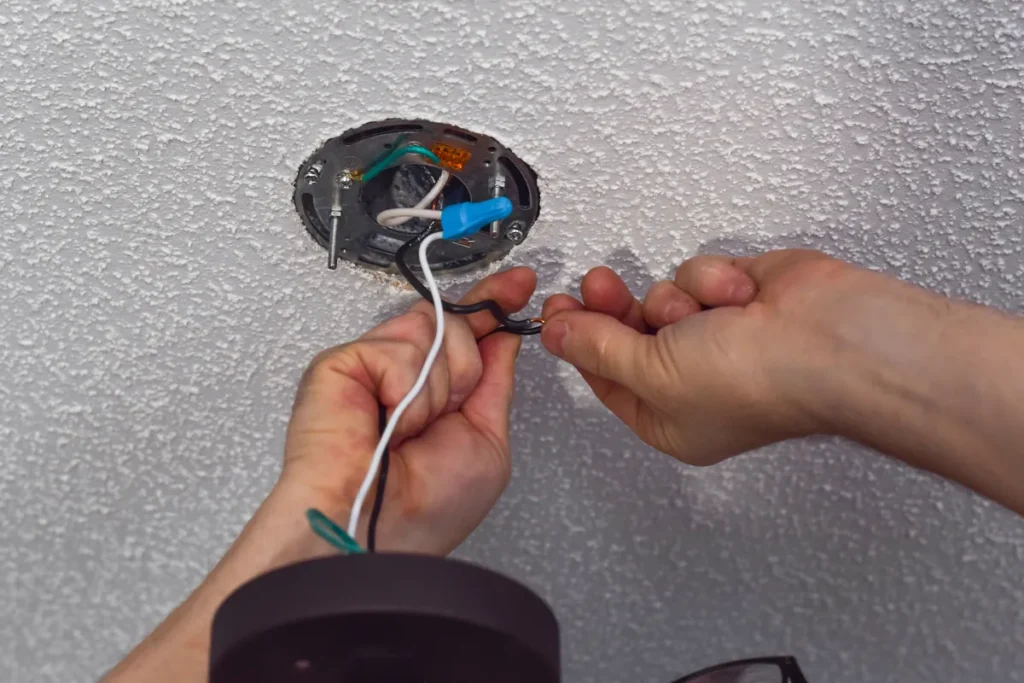
Good lighting is the cheapest way to make a room feel different. Recessed lights in a dim living room, under-cabinet lighting that finally makes the counter usable, a ceiling fan that actually holds still — these are small jobs with outsized impact. WJW Electric handles lighting and ceiling fan installation for homeowners across Southern New Hampshire and the Massachusetts border towns.
Billy Webber is a master electrician licensed in both Massachusetts and New Hampshire, working out of Pepperell right on the state line. And yes — he takes the small jobs. A single fixture, a fan that needs a proper brace box, a dimmer that never worked right. A master electrician does the work, the same as on the big jobs.
What Lighting Work Do We Handle?
Common Lighting & Fan Projects
- Recessed lighting in a living room, kitchen, or finished basement.
- Under-cabinet lighting that makes a kitchen counter genuinely usable.
- Dimmers and smart switches, including fixing LED flicker and buzz.
- Adding a light or switch where there’s never been one.
- Ceiling fan installation — including where there’s no fan-rated box yet.
- Replacing a dated fixture in an entry, dining room, or hallway.
- Outdoor and security lighting — entries, garages, walkways.
- A fixture that flickers, buzzes, or died and nobody knows why.
Ceiling Fans Need the Right Box
This is the single most common thing done wrong by a well-meaning DIYer or a handyman. A ceiling fan doesn’t just hang there — it spins, it wobbles slightly, and it puts sustained mechanical stress on whatever it’s mounted to. A standard light fixture box isn’t rated for that.
A fan needs a fan-rated brace box anchored to the framing. Swapping it in is routine work, and it’s the difference between a fan that runs quietly for fifteen years and one that gradually works itself loose. If you’re putting a fan where a light used to be, assume the box needs to change.
Recessed Lighting: Fewer, Better Placed
The instinct with recessed lighting is to add a lot of it. The better result usually comes from fewer fixtures in the right places — light where you actually do things, rather than an evenly spaced grid that flattens the room and lights the middle of the floor.
What matters: ceiling height, the beam spread of the fixtures, where the counters and seating and artwork are, and how the switching is grouped. Canless LED fixtures have made retrofits into finished ceilings far easier than they used to be, which means adding recessed lighting to an existing room is a much smaller job than most homeowners assume.
One thing worth checking early: if a room needs several new circuits, or if your panel is already full, that’s a conversation about an electrical service upgrade before the lighting goes in. Most lighting projects don’t require it — but it’s better to know at the estimate than halfway through.
What the Work Looks Like
1
Tell us what you want.
A photo of the room and the fixture you’re considering is usually enough to start.
2
Free estimate.
We confirm what’s involved — simple swap, new wiring, or a box that needs replacing — and give you a clear price.
3
Installation.
Fixtures mounted level and properly supported, wiring done to code, and switching set up the way you actually use the room.
4
Test and clean up.
Everything gets tested, dimmers checked for compatibility, and the work area left clean.
Why Homeowners Call WJW Electric for Lighting
- Master Electrician, MA & NH — MA Lic. #23701-A, NH Lic. #16011. Licensed on both sides of the border.
- Properly supported fixtures — fan-rated boxes where fans go, every time.
- No job too small — and no upselling you into one that is.
- A master electrician on-site — even for a single fixture.
- Fully insured, and the work area left clean.
- 10+ years in homes across these towns.
Lighting & Fan Installation FAQs
Can a ceiling fan go where my light fixture is now?
Not always. A fan needs a box rated to carry its weight and movement, and a standard light fixture box usually isn’t. Replacing it with a fan-rated brace box is a routine part of fan installation, and it’s what keeps the fan from working itself loose over the years.
How many recessed lights does a room need?
It depends on ceiling height, room size, the output of the fixtures, and how you use the room. Rather than filling a ceiling with cans, the better approach is planning placement around what’s actually in the room — which usually means fewer lights, better positioned.
Why do my LED lights flicker or buzz on a dimmer?
Usually the dimmer and the bulbs aren’t compatible. Many older dimmers were built for incandescent loads and don’t control LED drivers smoothly. Matching an LED-rated dimmer to the fixtures normally clears it up.
Do I need a permit to replace a light fixture?
A straightforward like-for-like swap generally doesn’t. Adding new circuits, new recessed locations, or new switch legs is different and is typically permitted work. We’ll tell you which category your project falls into before we start.
Can you add lighting where there’s no existing fixture?
Yes. Adding a fixture, recessed lights, or a fan where none exists means running new wiring and often a new switch leg, fished through existing ceiling and wall cavities. It takes longer than a swap, but it’s very common work in older homes.
Can you install lighting outdoors, or in a basement or garage?
Yes. Outdoor lighting uses weather-rated fixtures and boxes and often GFCI-protected circuits; garages, basements, and workshops usually call for higher-output fixtures. Both are common requests and straightforward with the right materials.